
Florida Public Records Law and Osceola County
Florida starts from open government. The right of access is built into the state constitution at Article I, Section 24. From there, Chapter 119 of the Florida Statutes fills in the details. This is the part of state law most people call the public records law. It tells custodians how to handle requests and what they can charge.
The policy itself is short and broad. Fla. Stat. § 119.01 states that public records are open for any person to inspect and copy. The statute screen below shows that opening policy.
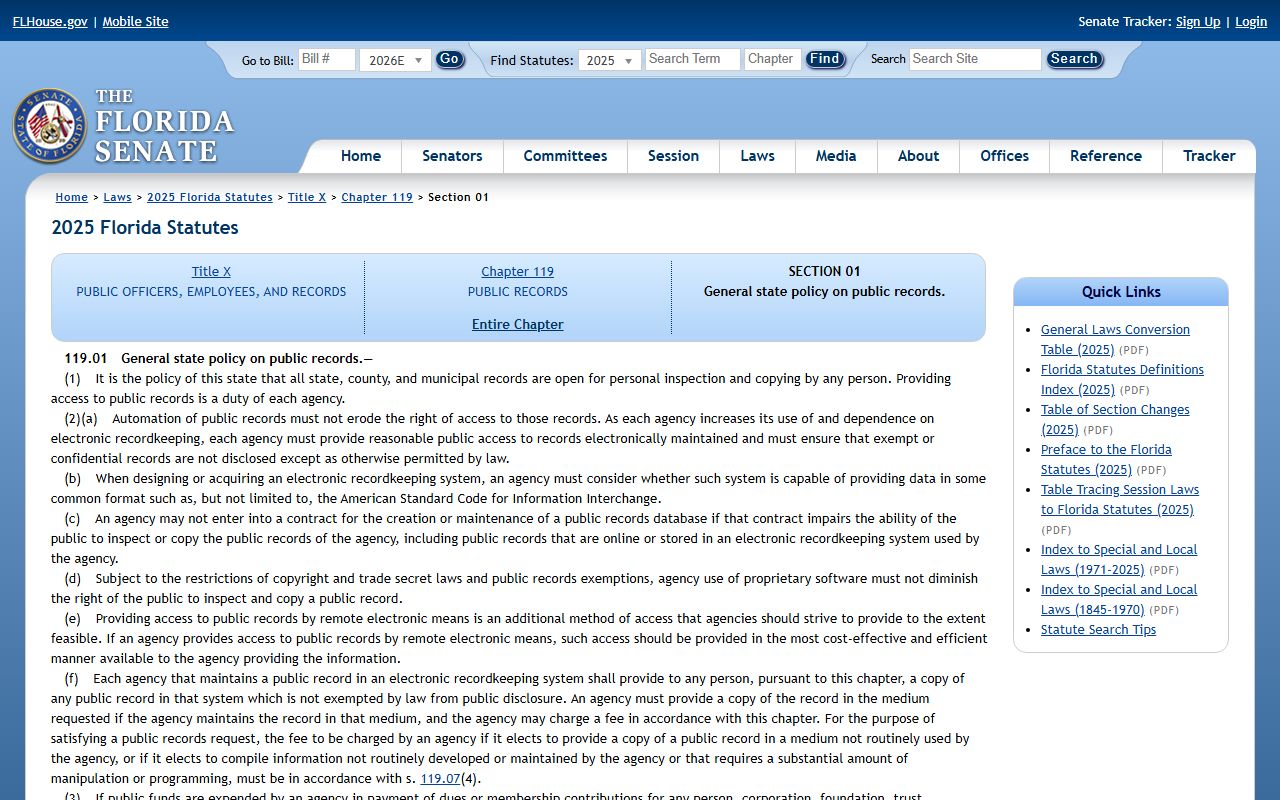
So the default is access. A custodian must have a legal basis to hold back any part of a record. Court records add one more layer. They also follow Florida Rule of General Practice and Judicial Administration 2.420, the rule for judicial branch records. In Osceola County, the Clerk acts as the custodian for court files and recorded documents.
What Records the Osceola County Clerk Maintains
The Clerk is the main records custodian for the county's court and recording functions. It is a unified office. The same staff support both circuit and county court divisions. They also keep recorded instruments in a separate official records system. That split matters when you plan a request.
Here is the broad scope the Clerk handles:
- Court records - civil, criminal, family, probate, guardianship, and traffic case files.
- Official records - deeds, mortgages, liens, notices, plats, and recorded marriage records.
- Marriage licenses issued and recorded by the office.
- Probate filings kept as circuit court probate division records.
- Court payment, fee, and comptroller functions for the county.
Not every county record sits with the Clerk. County government services, like some agency files, run through the county portal at osceola.org. Jail and corrections data sit with the Corrections Department. So your first step is to match the record to the right office. A deed goes to the Clerk's official records. A court case goes to the court system. A general agency file may go to county government.
How to File an Osceola County Public Records Request
You do not need a special form to ask for a public record in Florida. A plain request works. Still, a clear request helps staff find the file fast. Name the record. Give a date range. Say how you want to get it. The steps below walk through a clean request from start to finish.
- Identify the record type and the office that holds it. Court file, recorded document, or county agency file.
- Try the free online portal first. Court cases use the court case search. Recorded documents use the official records portal.
- If the record is not online, write a short request. Describe the record, the parties, and the dates.
- Send it to the custodian by mail, email, or in person at the courthouse counter.
- State the format you want. Inspection only, plain copies, or certified copies.
- Ask about the cost before staff pull a large file. Fees can apply.
- Pay any fee due and pick up or receive the record.
You can mail or visit the office at 2 Courthouse Square, Kissimmee, FL 34741. The Clerk site lists current hours and contacts. Keep your request specific. A vague request slows the search and can raise the labor cost.
Note: You do not have to say why you want a public record. Florida law does not require a reason for most requests. A purpose only matters when a special exemption ties access to a stated use.
Court Records vs Official Records
Two big record systems run through the Clerk. They are not the same. Court records hold case files. Official records hold recorded instruments. Each has its own portal and its own search fields.
Court records cover lawsuits and charges. They include civil suits, criminal cases, family matters, probate, and traffic. You search them by name, case number, or citation number. The case portal pulls circuit and county court cases into one tool. For a deeper look at case files, see the court records page.
Official records cover documents recorded with the Clerk. Think deeds, mortgages, liens, lis pendens notices, plats, and recorded marriage records. Title companies and lenders use this system most. You search by party name, document type, instrument number, or book and page. The two portals are run by the same office, yet they do not share one search box. Pick the right one for the record you need.
The line between exempt and confidential matters here too. Fla. Stat. § 119.0714 deals with court files and agency investigation records. The statute text is shown below.
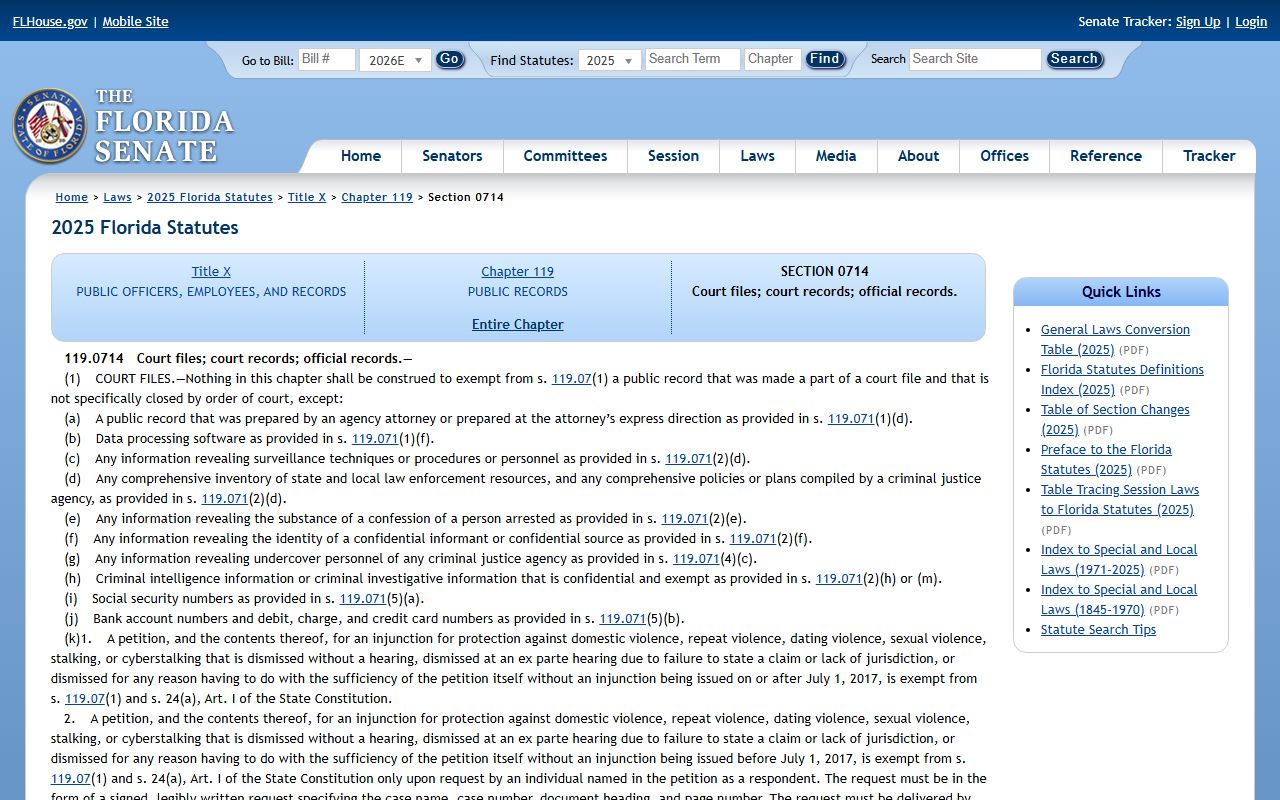
That section affects what court-file data stays open and what gets redacted. It is one reason a court record can look different from a plain agency file.
Public Records Request Form Fields
Whether you use a written letter or an office form, a good request holds the same core parts. The table maps each typical field and how to fill it. Use it as a checklist before you send your request.
| Field | Notes |
|---|---|
| Requester name and contact | Your name, mailing address, email, and phone for a reply. Florida does not require ID for most requests. |
| Records description | Name the record clearly. Add party names, case or instrument numbers, and a date range to narrow it. |
| Date range | A start and end date cuts search time and labor cost. |
| Format requested | Inspection only, plain paper or digital copies, or certified copies. |
| Delivery method | Pick up at the counter, mail, or email where the file allows. |
| Fee acknowledgment | Note that you agree to pay copy and certification charges as set by law. |
Keep a copy of your request. If staff need to clarify the scope, a written record helps both sides.
Fees for Public Records
Inspection of a public record is generally free. Copies and special services are not. The Clerk charges set fees for copies, certifications, and recording. Florida fixes many of these charges under Fla. Stat. § 28.24. The statute screen is shown below.
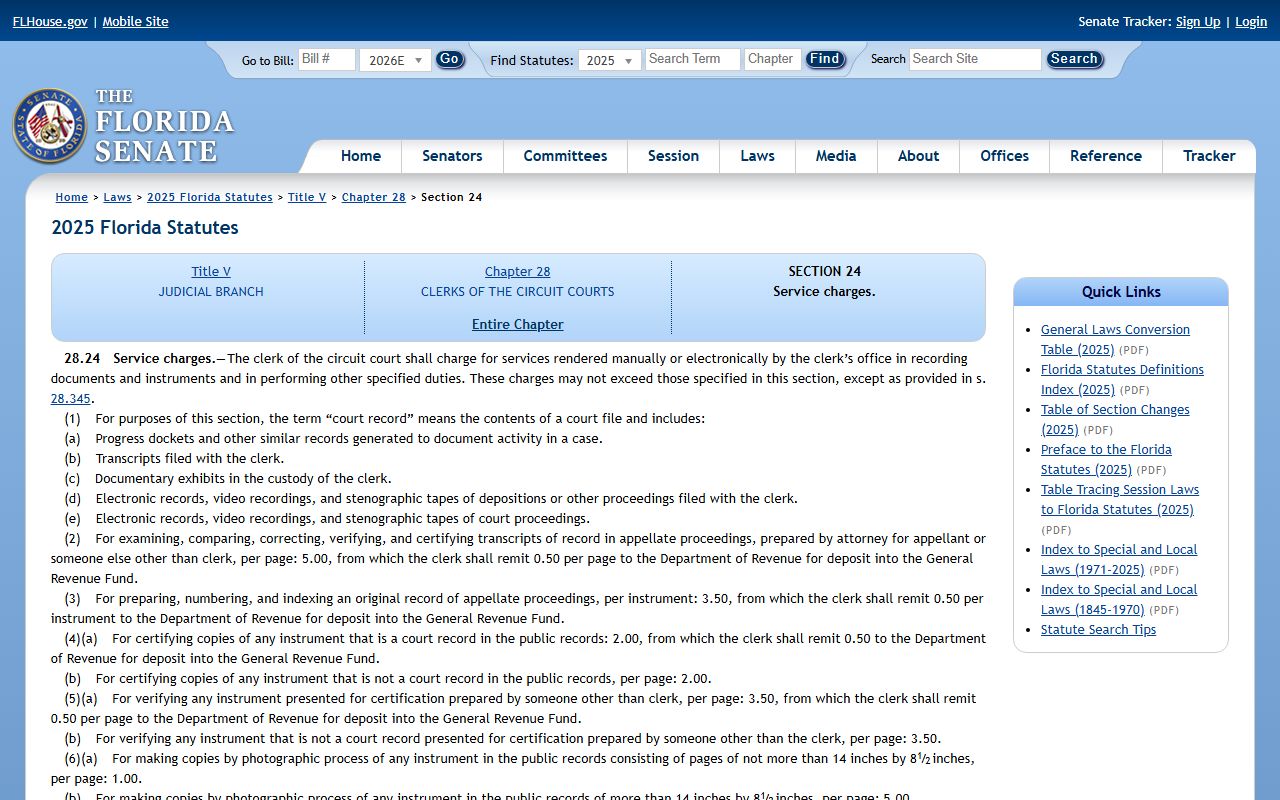
Exact dollar totals can change, and recording taxes can stack on top of a base fee. So check the current Clerk fee page before you pay. The table groups the common charges by category and cites the source.
| Category | Source |
|---|---|
| Plain copies | Clerk fee schedule under § 28.24. |
| Certified copies | Clerk certification fee under § 28.24; eCertified option online. |
| Recording fees | § 28.24 plus documentary stamp and recording taxes where they apply. |
| Court filing fees | Statutory filing fees plus local service charges where authorized. |
| Extensive use / labor | Special service charge allowed when a request needs extensive staff time. |
A viewing fee and a certified copy fee are not the same. Certified copies cost more because the Clerk attests to them.
Exemptions and Confidential Records
Open is the rule, but the law lists exceptions. Fla. Stat. § 119.071 sets out general exemptions. It protects items like certain personal data and protected agency records. The statute text is shown below.
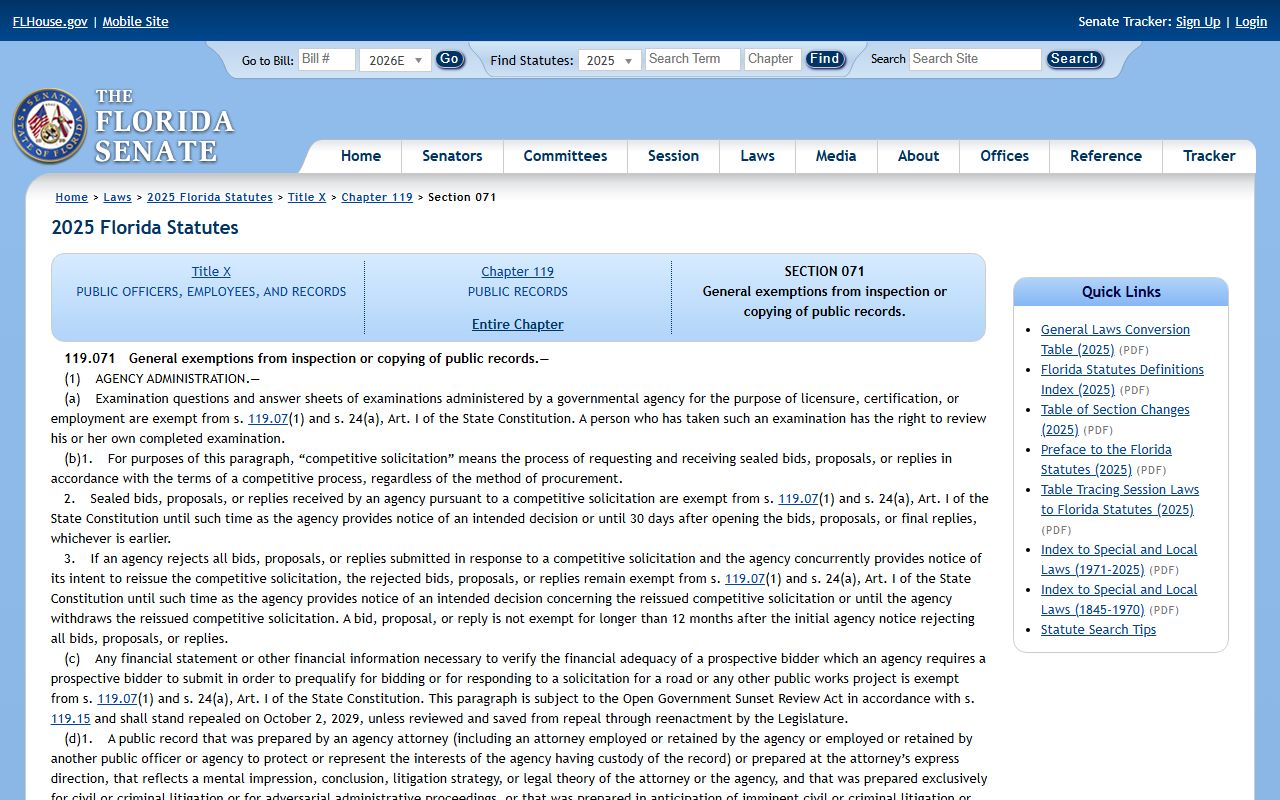
Two words matter here. Exempt and confidential. They are not the same. Exempt means the custodian may or must withhold or redact the protected part. Confidential goes further. It means stronger nondisclosure, with access limited by statute or court order.
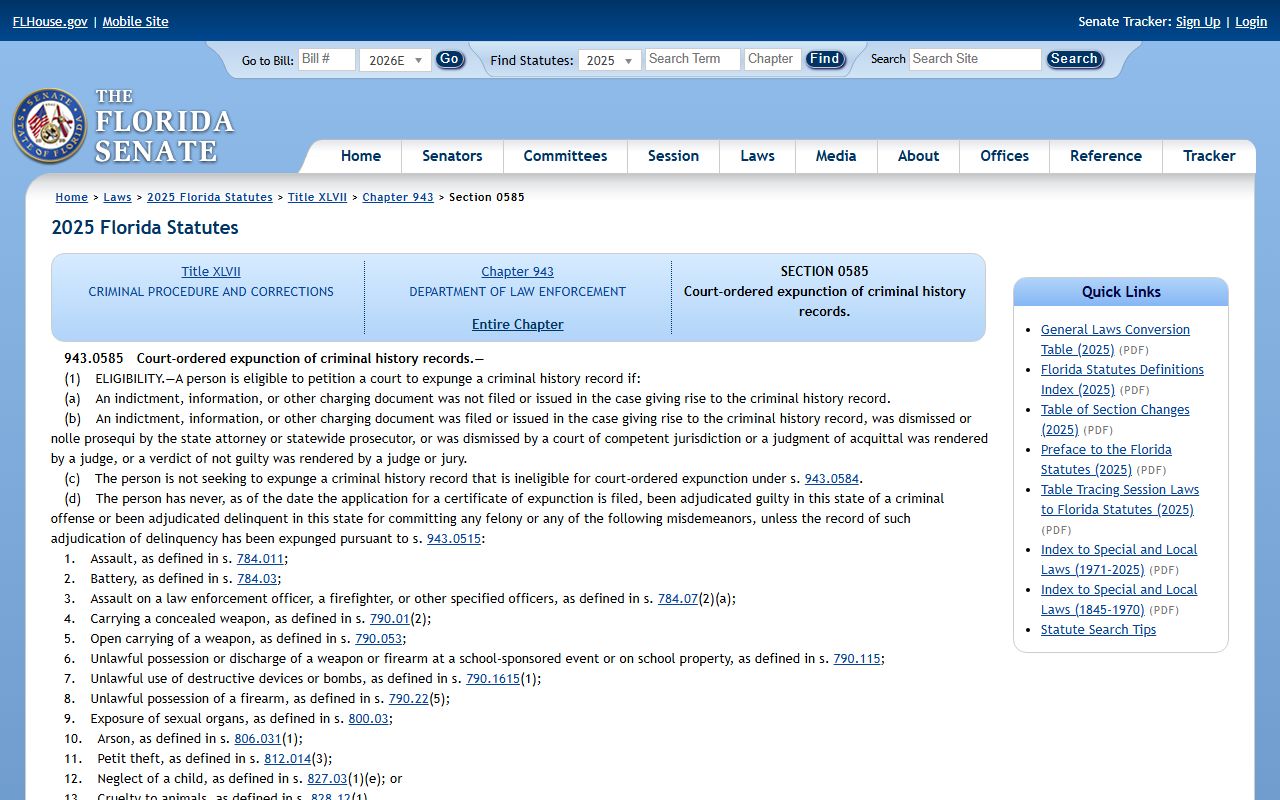
Some records are limited by their own statutes. Sealed and expunged criminal records follow the expunction statute, Fla. Stat. § 943.0585. That screen is shown below.
Juvenile, adoption, and mental health records carry their own confidentiality rules as well. A sealed or expunged case does not vanish from every system. Authorized agencies may still hold or view some data under the law. For arrest data and charge files, see the arrest records page.
Response Timelines and Denials
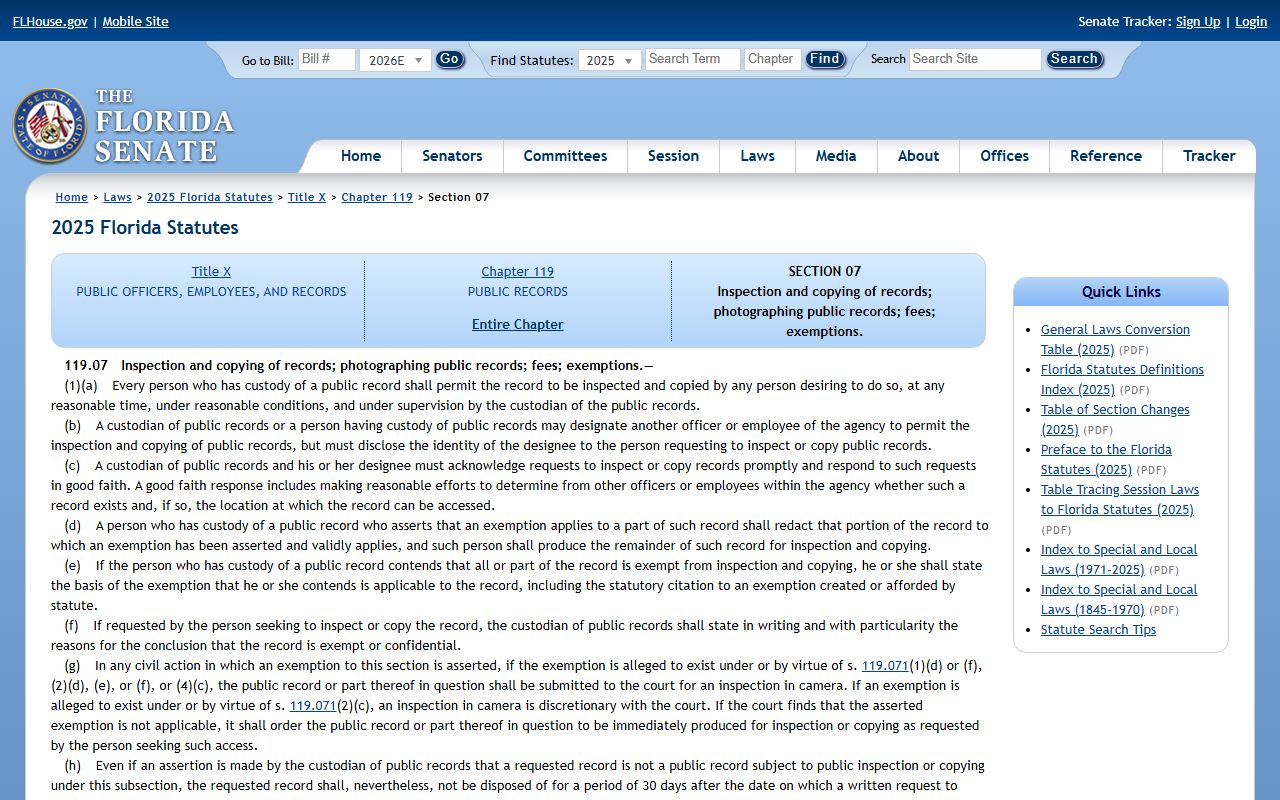
Florida law sets a duty to respond, not a fixed day count for every case. Fla. Stat. § 119.07 requires a custodian to allow inspection and copying. The statute screen is shown below.
The standard is to act in good faith and without delay. A simple request should get a quick reply. A large or complex request can take longer while staff gather and review files. The custodian may redact exempt parts before release.
What if a request is denied in whole or in part? Ask for the statutory basis. The custodian should point to the specific exemption used. Then ask whether a redacted copy can be produced instead of a full denial. Often the answer is yes. A record can come out with protected fields blacked out. If you still disagree, you can seek review through the courts or through legal counsel.
Note: Keep your request and any reply. If a dispute arises, a clear paper trail shows what you asked for and what the custodian said in response.
Searching Official Records Online
Recorded documents have their own free search tool. The official records portal lets you look up deeds, mortgages, liens, plats, and recorded marriage records. You do not need to visit the courthouse to start. Many records show on screen, though some images are restricted.
The portal offers several search tabs. Each one targets a different way to find a document:
- Party name - last name first, no comma between first and last names.
- Document type - search by code or name, with a filter list.
- Instrument number - the recorded document's unique number.
- Book and page - the recording book and page reference.
- Property and legal description - for plat, section, township, and range searches.
When you find a document, you can view details and order a certified copy. Restricted images show a notice rather than the page. If a record will not display, the office can confirm whether it is held back by law or simply not imaged. Start your search at the official records portal.