
How to Look Up Osceola County Court Dockets
Dockets in Osceola County come from the Clerk's Benchmark case search. The portal pulls circuit and county court cases into one place. You do not search a docket on its own. You search for a case first, then open it to read the docket inside. The search page offers three modes: Name, Case Number, and Citation Number. A case number is the cleanest path. A name works when you lack the number, but common names return many hits. For a traffic ticket, the citation number beats a name search.
Decide what you know before you start. Then follow these steps.
- Open the search page at courts.osceolaclerk.com.
- Choose Name, Case Number, or Citation Number.
- Enter the value. Use last name first for people.
- Narrow by case type if the filter shows.
- Press Search and open a case from the results.
- Read the docket entries inside the case detail.
If results do not load, the case may be old or restricted. Archived files can need staff retrieval. Call the Clerk when an old case does not appear online.
What an Osceola County Court Docket Shows
A docket is a log of case events. Each line marks one thing that happened, with the date it happened. Read top to bottom, and you see the case unfold. Some entries link to a document image. Some images are restricted and show a notice instead. The table below maps common docket entries and what each one means.
| Docket Entry | What It Means |
|---|---|
| Complaint / Petition | The first filing that opens the case. |
| Summons Issued | Notice telling a party to answer or appear. |
| Service | Formal delivery of legal papers to a party. |
| Motion | A written request for a court order. |
| Notice of Hearing | Sets a date and time for a court event. |
| Order | The judge's written ruling on an issue. |
| Judgment | The final decision or money award. |
| Disposition | The final outcome of the case or a charge. |
Other lines you may see include capias, continuance, satisfaction of judgment, writ, and appeal. Each one is a marker, not the full document. To read the paper behind a line, open its image when one is posted, or order a copy from the Clerk.
Docket vs Full Case Record in Osceola County
People mix up these two words. A docket is the event list. The case record is the set of documents themselves. The docket points to the papers; the record holds them. You read a docket to see what happened and when. You pull the record to read the actual filings. The table sets the two side by side.
| Docket | Full Case Record |
|---|---|
| A dated list of case events. | The documents filed in the case. |
| Short lines, one per event. | Full text of motions, orders, and judgments. |
| Shows the case timeline at a glance. | Shows the detail behind each event. |
| Free to view in the case detail. | Some images online; certified copies cost more. |
| Good for status and next hearing. | Good for proof and legal use. |
Need a copy you can use in court? A docket print is not enough. Order a certified copy from the Clerk so the office attests to it. For the full picture of what a case file holds, see the court records page.
Note: A docket line names an event. The document behind it may be online, restricted, or available only as a Clerk copy.
Which Courts Publish Dockets in Osceola County
Osceola County sits in Florida's Ninth Judicial Circuit with Orange County. Two trial courts make the case dockets you will read. Circuit court is the primary trial court. It hears felony crimes, family law, probate, guardianship, juvenile matters, and civil cases above the county limit. County court handles misdemeanors, traffic, small claims, evictions, and lower-value civil disputes. The local Clerk keeps records for both, so a single Benchmark search reaches both court levels.
The Ninth Circuit site lists the judges who hear these cases. Knowing the assigned judge helps when you read a docket or plan for a hearing. You can browse the bench on the circuit's judicial directory.
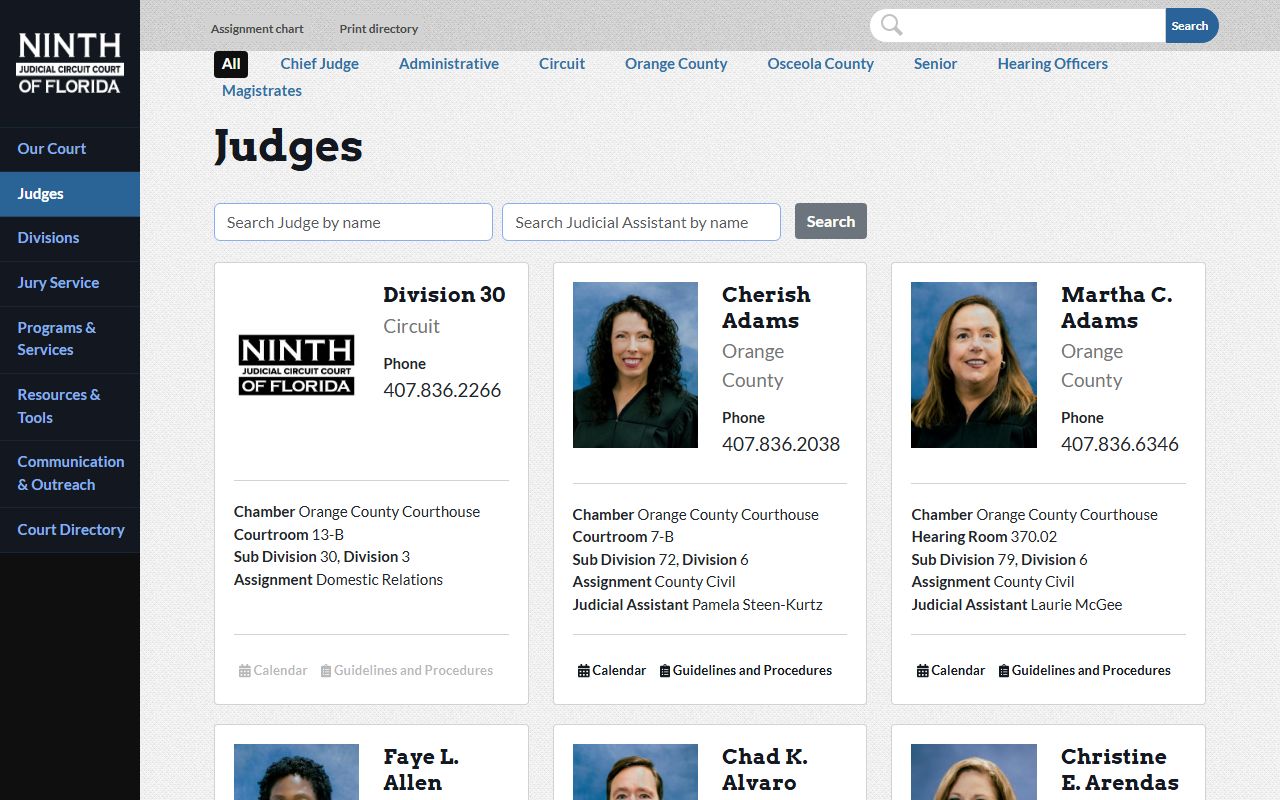
This Ninth Circuit judges directory lists the judicial officers across the circuit. Use it to match a name in a docket to a sitting judge.
State appeals from Osceola trial courts go to the Sixth District Court of Appeal. The Florida Supreme Court sits above that when jurisdiction allows. Specialty dockets, such as drug court or veterans court, run as supervised programs inside the circuit. They are not separate record offices. Their case events still route through the Clerk unless a statute makes them confidential. For more on the trial courts, see the Circuit Court and County Court pages.
Reading Hearing and Calendar Information
A docket often shows hearings as you scroll. A notice of hearing sets the event. The line may carry a hearing type, a date, a time, and a courtroom. The judicial officer can be listed too. Read these lines with care. A hearing can be reset, so the latest line controls.
Watch for the word continuance. It means a court event was pushed to a later date. The old date no longer holds. The newest notice of hearing tells you when to appear. If two lines seem to fight, trust the most recent date.
- Hearing type, such as arraignment, motion, or trial.
- Date and time the event is set.
- Courtroom or division when it is posted.
- Judicial officer, when the entry includes one.
Dockets can lag behind real changes. A reset may not post right away. For a time-sensitive hearing, do not rely on the screen alone. Call the court division to confirm the date, time, and room before you go.
Note: The newest hearing notice on a docket controls. An older date may have been reset by a later continuance or order.
Why a Docket Page May Show Access Denied
Benchmark has a Court Docket link in its menu. A direct visit to that docket page can return an Access Denied notice. The message says you do not have permission to that page. This does not mean the case is hidden. It means the docket view may need the right portal session or permission, or it expects you to start from the live search.
The fix is simple. Begin at the case search page, not the bare docket link. Run a Name, Case Number, or Citation search. Open a case from the results. The docket then shows inside that case detail. If you still hit a wall, the file may be sealed, archived, or routed through staff.
- Start from the search page, not the direct docket URL.
- Open a case from your results to view its docket.
- Call the division for any time-sensitive hearing.
- Ask the Clerk if an old or sealed case will not load.
For broader help with case files and access rules, the court records and Clerk of Court pages add more detail.
Reading an Osceola County Case Number on a Docket
Every docket sits under a case number. Florida case numbers follow a set pattern. They start with the year the case opened. Next comes a case-type code. Then a six-digit sequence. The Benchmark tooltip gives the example 2004 TR 000123, where TR marks a traffic case. The code tells you which division holds the file.
This matters when you search. The number removes doubt when two people share a name. It also tells you the kind of case before you open the docket. A traffic code points to county court traffic. A family or probate code points to a circuit division. Pick the matching case type filter, and your results sharpen.
- Year - the four-digit year the case was filed.
- Type code - a short code for the division, such as TR.
- Sequence - a six-digit running number for that year and type.
Traffic dockets show citations, hearings, and fines. For more on those cases, see the traffic court records page. Criminal dockets show charges, pleas, and sentences; the criminal records page covers them.
Federal Court Dockets Are Searched Elsewhere
Not every case tied to Osceola County sits in Benchmark. Federal dockets are not in the Clerk's portal at all. Federal civil and criminal cases are filed in the U.S. District Court for the Middle District of Florida. Bankruptcy runs through the Middle District Bankruptcy Court. Federal dockets are searched through PACER and CM/ECF, which usually charge a fee unless you qualify for a waiver.
The bankruptcy court keeps its own docket system for cases in this district. You can reach it through the official bankruptcy court site.
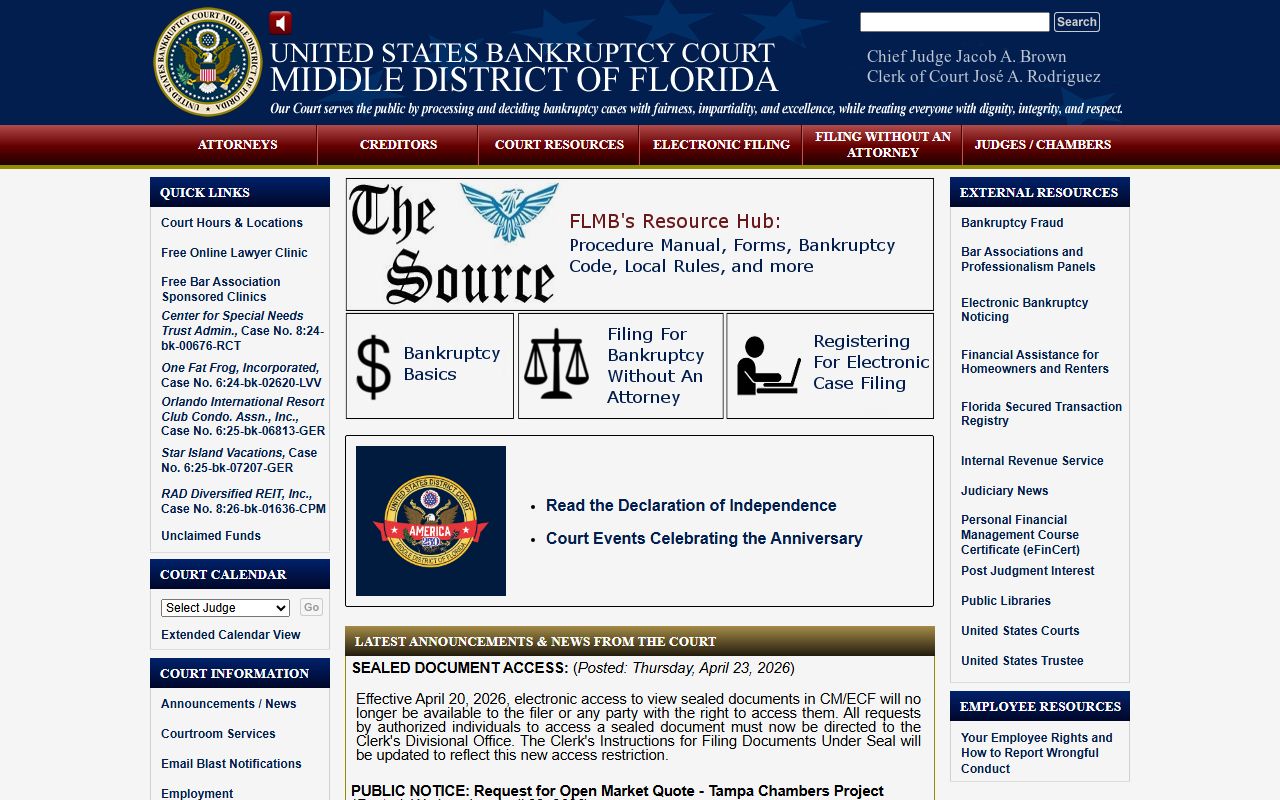
The Middle District bankruptcy court site links to filing, docket, and case access tools for federal bankruptcy matters.
You can also read many federal opinions and dockets for free. CourtListener is a free research tool, though it is not the official docket of record. It helps when you want to read an order without a paid login.
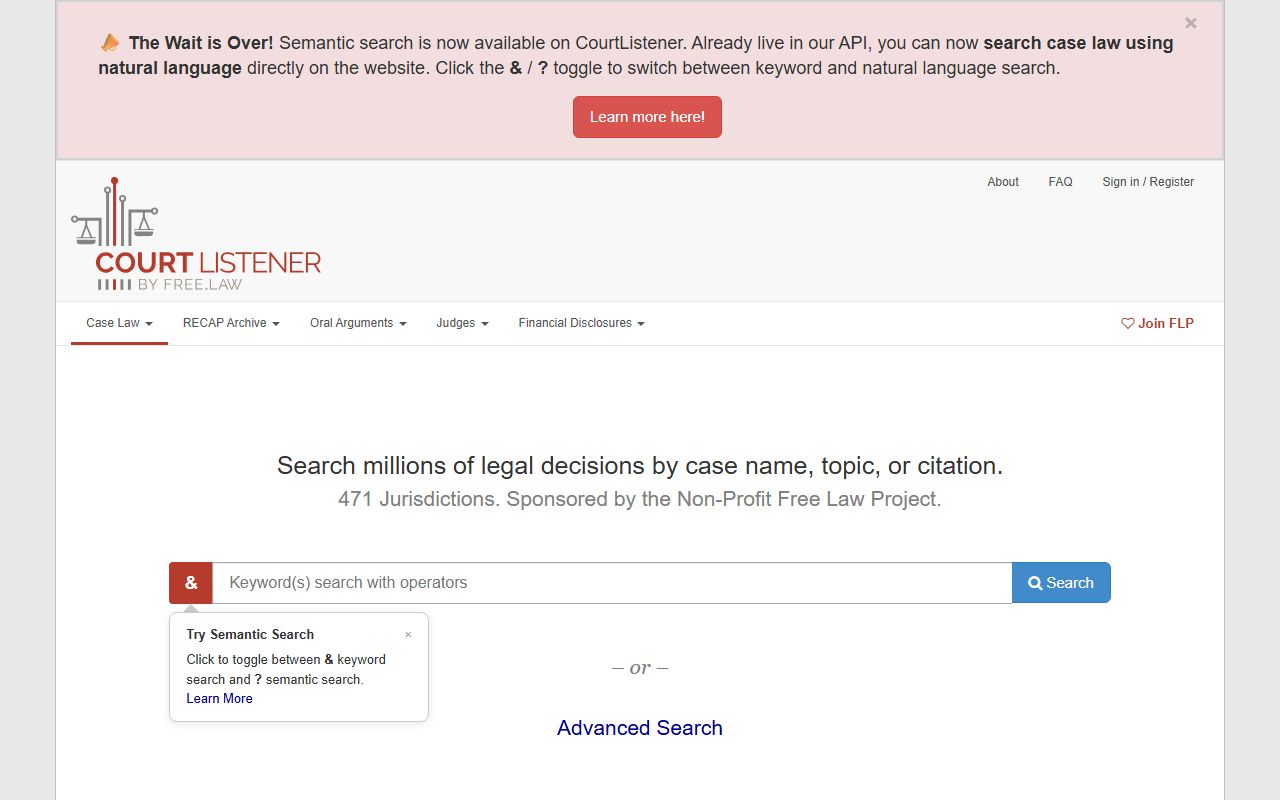
Use CourtListener to search free opinions and many federal dockets. Confirm anything important against the official PACER record.
The Ninth Circuit Behind Osceola County Dockets
Osceola County dockets all flow from the Ninth Judicial Circuit. The circuit serves Osceola and Orange counties together. Its public site holds judge listings, courthouse pages, self-help resources, and program information. When a docket leaves you with a question about a division or a judge, the circuit site is a good next stop.
The homepage points to the courts, services, and resources across both counties.
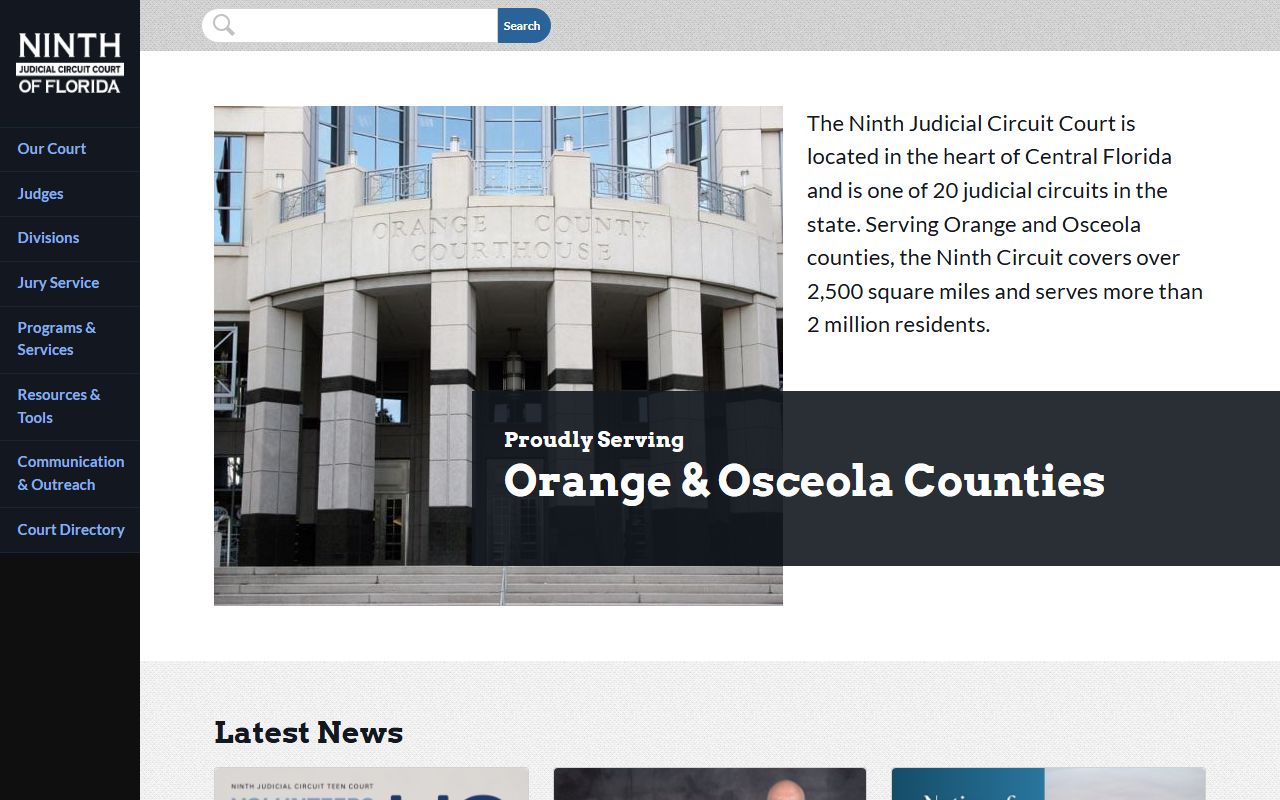
The Ninth Judicial Circuit homepage links to courthouse pages, self-help tools, and program details. It is the official source for circuit-wide court information that supports the dockets you read.