
How to Search Osceola County Criminal Records
Criminal data in Osceola County sits in more than one system. Arrests and jail status come from Osceola County Corrections. Charges and case outcomes come from the Clerk's court case search. Pick the system that holds the data you need. For someone in jail now, start with the current inmate search. For a recent booking, use the daily arrest report. For the full court story, use the case portal. Each tool is free to search.
Have a name ready, spelled correctly. A case number works better when you have one. Follow these steps.
- To find a person in custody, open the current inmate search and enter a name.
- For recent bookings, check the daily arrest report and pick a date.
- For charges and case results, open the court case search and choose Name or Case Number.
- Open the record to read the charge, statute, bond, and disposition.
- For a statewide rap sheet, request a report from the state agency, FDLE.
- For federal charges, search the Middle District of Florida through PACER.
Inmate data updates several times each day. When a person is released, the next update drops them from the current search. So a missing name does not always mean no arrest happened.
The lead-in below points to the county law enforcement agency that makes many of these arrests.
The Osceola County Sheriff's Office is the primary law enforcement agency for the county.
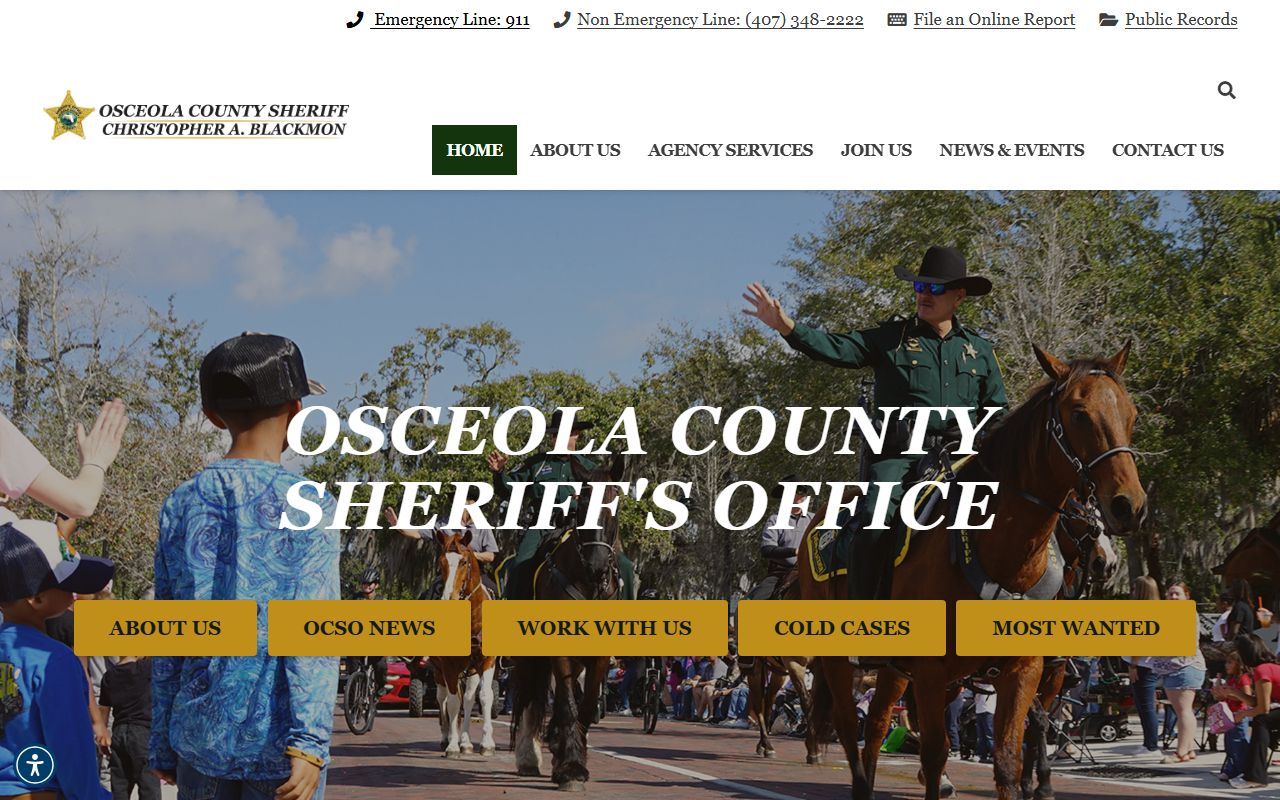
Deputies and city police book arrestees into the county jail, where Corrections then publishes the public custody data.
Arrest Records vs Osceola County Criminal Case Records
An arrest record and a criminal case record are not the same thing. An arrest record is jail and booking data. It shows the booking number, the charge at intake, the bond, and the custody status. A criminal case record is court data. It shows the formal charge filed by the state, each hearing, the plea, and the disposition. One arrest can lead to a case, no case, or several charges. They can also differ.
This split matters when you read results. The jail may book a person on one charge. The state may then file a different charge, drop it, or add more. So always check both the jail data and the court case to get the full picture. The court record carries the legal weight. The jail record reflects the moment of booking.
Note: Inclusion in the inmate search does not indicate guilt. Booking data reflects custody, not a court finding.
What an Osceola County Criminal Record Shows
A criminal record holds a set of standard fields. Together they identify the person, the charge, and the result. Jail records lean toward booking and bond data. Court records lean toward charge, plea, and disposition. The table below maps the common fields you will see across these Osceola County criminal records and what each one tells you.
| Field | What It Shows |
|---|---|
| Name / AKA | The person's legal name and any known alias |
| Booking Number | Jail's unique number for that intake event |
| Demographics | Race, sex, DOB, height, weight, eyes, hair |
| Statute | The Florida statute number tied to the charge |
| Charge / Offense | Short text for the alleged crime |
| Bond | Bond amount set per charge, plus a total bond |
| Reference Case | The court case number linked to the charge |
| Disposition | The final court outcome of the charge |
Some fields stay hidden. The law redacts victim data, minor details, and certain personal identifiers. A sealed charge may show a notice instead of the data.
Charges vs Convictions in Osceola County Criminal Records
People often treat a charge and a conviction as one thing. They are not. A charge is the accusation. A conviction is the finding or plea of guilt. A record can show a charge that later got dropped, reduced, or beaten at trial. So a charge alone does not prove a crime. Read the disposition to learn the real result. The table below sets the two side by side.
| Aspect | Charge | Conviction |
|---|---|---|
| Meaning | The formal accusation of a crime | A finding or plea of guilt |
| Who decides | The state files it | The court enters it |
| Proof of guilt | No, only an allegation | Yes, the legal result |
| Can it change | Yes, it can be dropped or reduced | Stands unless appealed or vacated |
| Where shown | Booking and early case docket | The case disposition |
Some Florida outcomes withhold a formal conviction even after a plea. So read the docket text closely. A few key terms help here.
- Arraignment
- The first court hearing, where the charge is read and a plea is taken.
- Plea
- The defendant's formal response to a charge, such as guilty or not guilty.
- Disposition
- The final outcome of a charge or case.
- Capias
- An arrest writ, often issued for a failure to appear.
- Bond
- Money or set conditions that secure release from custody.
Mugshots and the Osceola County Daily Arrest Report
Mugshots appear in the county jail data. The current inmate search shows a photo, an ID, and the name. Each profile can link to charges, statutes, bond, and a reference case number. The daily arrest report lists people booked on a chosen date. It carries name, mugshot, booking number, birthdate, arrest location, and statute. You can pick recent dates from a dropdown, print the report, or download it as a file.
Treat these images and entries with care. A booking photo marks an arrest, not a verdict. The data updates several times each day, so it shifts as people are booked and released. The lead-in below points to the county jail records request page for older or detailed data.
For records the public reports do not show, use the county's jail record requests process.
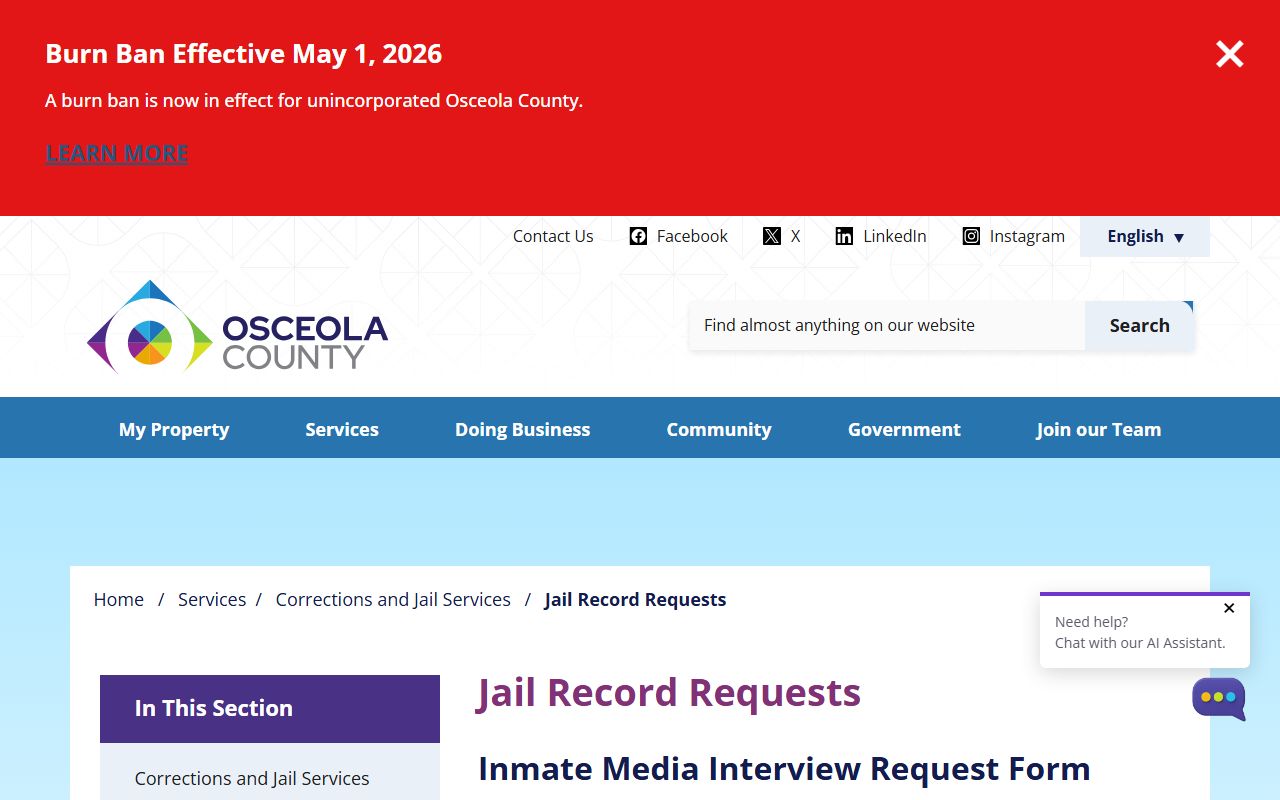
That page explains how to ask Corrections for specific booking or custody documents in writing.
Note: Mugshots and booking entries reflect a single point in time. Always confirm the court disposition before drawing any conclusion.
Sealed vs Expunged Osceola County Criminal Records
Florida lets some people clear part of their record. Two paths exist. Sealing hides a record from public view but keeps it for certain agencies. Expunction goes further and removes or destroys the qualifying record. The two are not the same, and not every case can use them. The table below compares both paths so you can see the difference.
| Aspect | Sealed | Expunged |
|---|---|---|
| Effect on record | Hidden from public view | Removed or destroyed for the public |
| Agency access | Authorized agencies may still view it | Most retention is ended; access is very limited |
| Florida statute | Fla. Stat. § 943.059 | Fla. Stat. § 943.0585 |
| How to start | FDLE eligibility, then a petition | FDLE eligibility, then a petition |
| Scope | Public cannot see it | Stronger and more final removal |
Both paths usually start with an eligibility review by FDLE. Then the person files a petition in the Ninth Circuit court that handles Osceola County. A judge must sign the order. Past convictions, certain offense types, and prior sealing can block eligibility. Check the statutes or talk to a lawyer before you file.
Juvenile and Restricted Osceola County Records
Not all criminal data is open. Florida law limits access to several categories. Juvenile delinquency and dependency records are confidential under Fla. Stat. § 985.045. Parents, attorneys, agencies, and the court may still see them. The general public usually cannot. Adoption files and mental health clinical records are also protected. Sealed and expunged cases follow the rules above.
Florida starts from open access under Fla. Stat. § 119.01, the state public records policy. But many exemptions apply. Public means you can inspect and copy an open record. It does not mean every page sits online. Victim data, minor details, and certain identifiers get redacted. If a request is denied, ask for the legal basis and whether a redacted copy can be made.
State and Federal Osceola County Criminal History
The county systems show local arrests and court cases. A statewide rap sheet comes from a different source. The Florida Department of Law Enforcement, FDLE, keeps the state criminal history. You can request a report from FDLE for a person across the whole state, not just Osceola County. This pulls together arrest and disposition data reported by agencies statewide.
The lead-in below points to the FDLE request page for a statewide criminal history.
Request a state rap sheet through FDLE criminal history records.
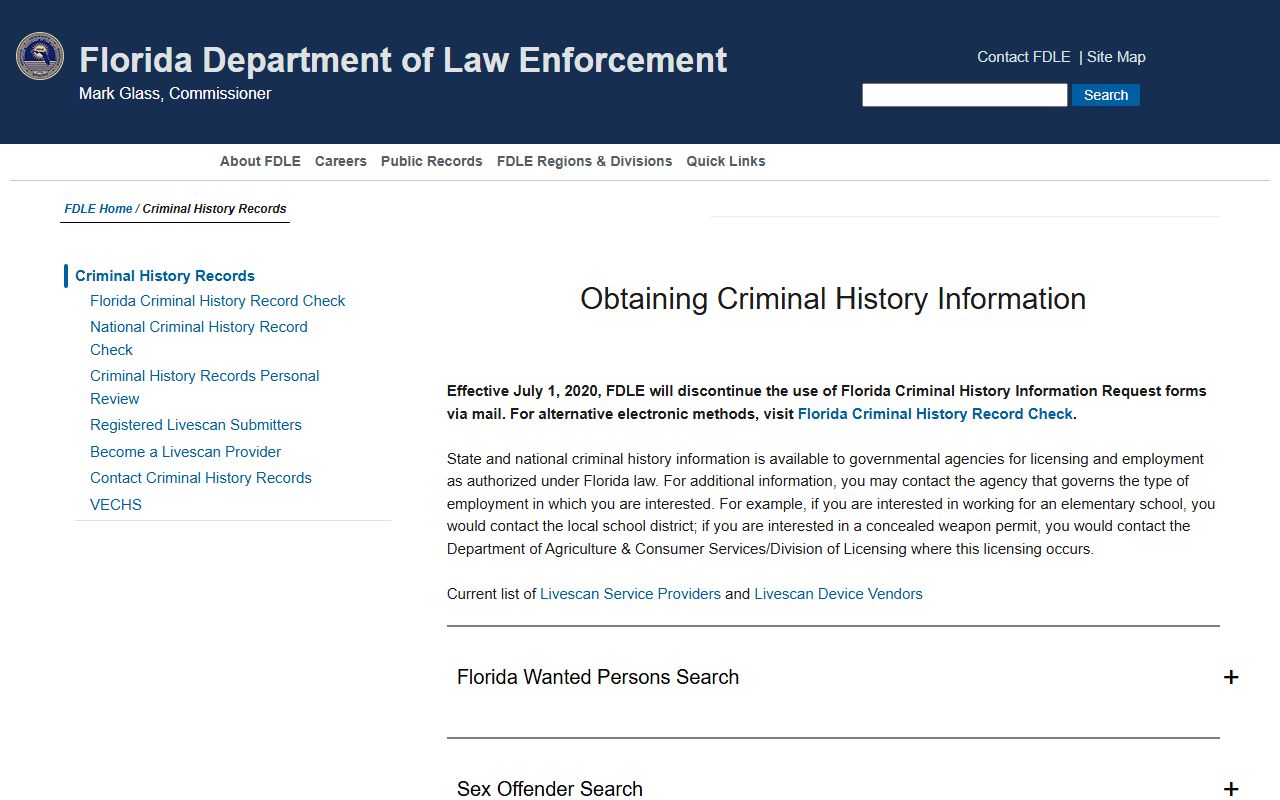
That page covers the request types, the data covered, and the steps to order a report.
Federal crimes are different again. They are charged in the U.S. District Court for the Middle District of Florida, not the county clerk. Federal cases run through PACER and CM/ECF. The lead-in below points to the federal prosecutor for this district.
Federal prosecutions here are handled by the U.S. Attorney for the Middle District of Florida.
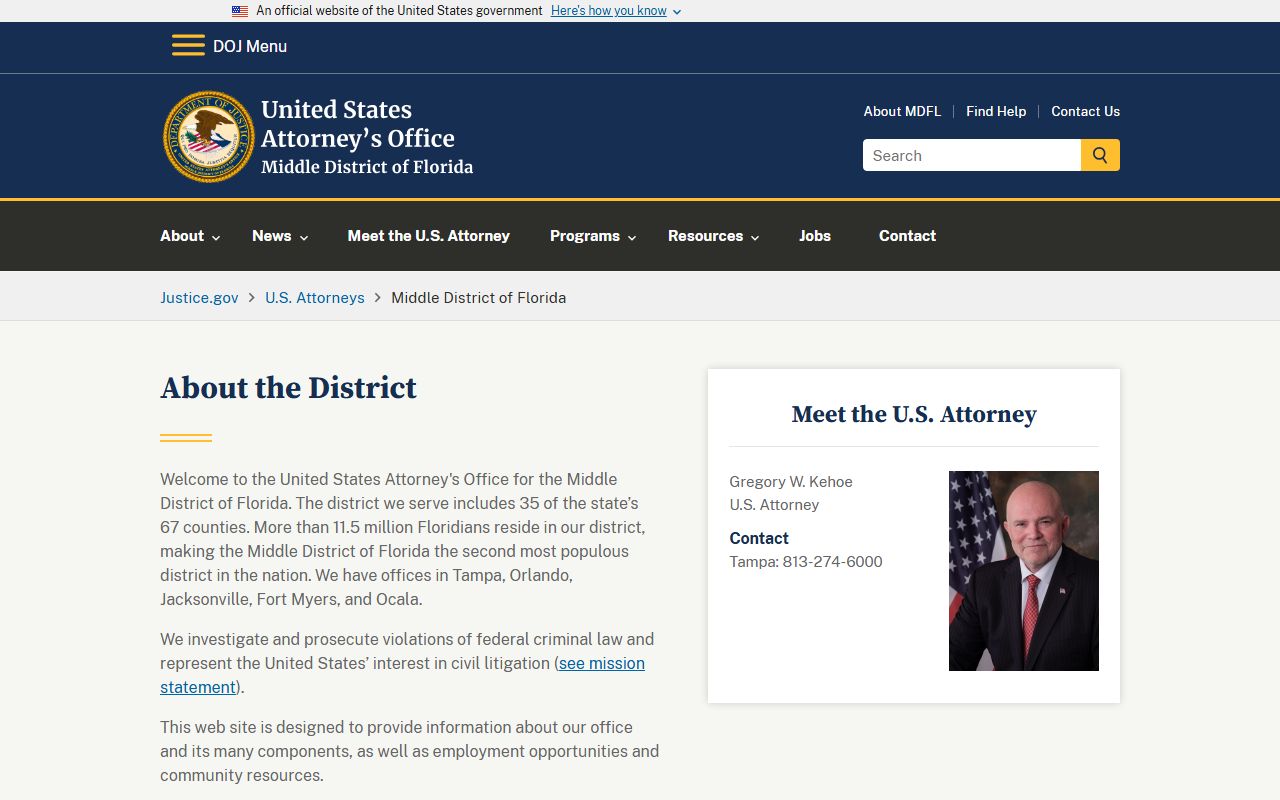
That office prosecutes federal crimes tied to Osceola County, while the case docket itself sits in the federal court system.
Who Prosecutes and Defends Osceola County Criminal Cases
Florida calls the prosecutor the State Attorney. Osceola County is served by the Office of the State Attorney for the Ninth Judicial Circuit, which also covers Orange County. This office files and prosecutes felony, misdemeanor, and juvenile delinquency cases. It works with victim services and law enforcement. Its public records can include charging documents, plea deals, and sentencing data, though investigative and victim details can be held back.
The lead-in below points to the State Attorney for this circuit.
Criminal cases are prosecuted by the State Attorney, Ninth Judicial Circuit.
On the defense side, the Public Defender for the Ninth Judicial Circuit represents qualifying indigent defendants. The court appoints the public defender after a financial application. That office handles criminal and certain court-appointed matters. It does not take general civil disputes. If you face charges, talk to a lawyer before any hearing.
Background Check Considerations for Osceola County Criminal Records
People use criminal records for many reasons. Some check a date. Some screen a tenant or worker. The free county and state tools help with personal lookups. But a real background check has rules. The federal Fair Credit Reporting Act, the FCRA, governs reports used for credit, jobs, housing, and insurance. This site and the free public portals are not consumer reporting agencies. So their data must not be used for FCRA-regulated decisions.
Read records with care. A charge is not a conviction. Names can match the wrong person. Booking data can lag behind the court result. For a formal, accurate report, the statewide FDLE history is the better source than a single jail snapshot. When the stakes are high, use a proper screening process and confirm identity with more than a name match.
Note: Do not use free public record data for credit, employment, tenant, or insurance decisions. Those uses fall under the FCRA.