
Osceola County Circuit Court Overview
In Florida the circuit court is the primary trial court. It is the court of general jurisdiction. That means it can hear the most serious and the most complex cases. The Osceola County Circuit Court handles felony crimes, family law, probate, guardianship, and juvenile matters. It also takes civil cases that rise above the county court dollar limit. Injunctions and protective orders are heard here too. The court even reviews certain appeals from the county court below it.
Florida runs two trial courts side by side. The circuit court is the higher one. The county court is the lower one. Both serve Osceola County, and both use the same elected clerk for records. The clerk keeps circuit and county case files in one search system. So the line between the courts is about what kind of case it is, not about where the papers are kept. The state describes circuit court duties on its main courts site.
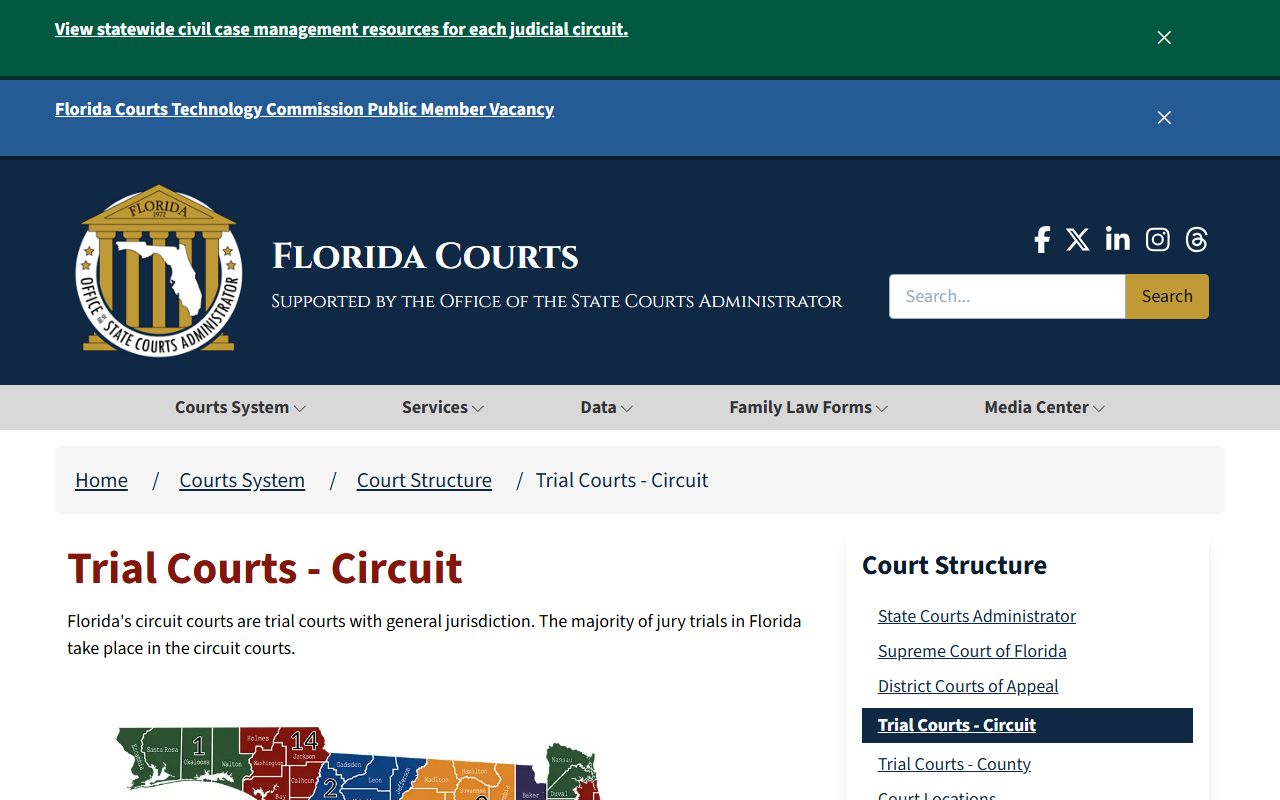
The Florida circuit court overview page lays out the general jurisdiction of these courts across the state.
The Ninth Judicial Circuit
Osceola County is part of the Ninth Judicial Circuit. The circuit covers two counties: Osceola and Orange. Florida groups its counties into numbered circuits to share judges, staff, and court administration. So the Osceola County Circuit Court is not a stand-alone system. It is the Osceola arm of a two-county circuit.
The circuit assigns judges to divisions and to the Osceola courthouse. A chief judge leads the whole circuit. Trial judges hear cases in civil, family, criminal, probate, and juvenile work. Because the circuit spans two counties, some judges and resources serve both. For Osceola County records and hearings, the cases still route through the local clerk and the Osceola courthouse. The circuit publishes a judges directory and courthouse list on its official site.
Note: Judge and division assignments can change. Check the case docket or hearing notice for the judge and courtroom on a specific matter.
Circuit Court Divisions
Florida circuits do not use numbered courts. They use divisions. Each division is a group of judges who hear one type of case. The Osceola County Circuit Court is split into divisions so that judges build skill in one area of law. A felony judge knows criminal rules. A probate judge knows estate law. The table below maps the main circuit divisions and what each one hears.
| Division | What It Hears | Notes |
|---|---|---|
| Civil | Civil claims above the county court limit, foreclosures, large contract and injury suits, injunctions. | High-value disputes and equity matters. |
| Family | Divorce, paternity, child support, time-sharing, and domestic violence injunctions. | Some filings are access-limited by law. |
| Criminal | Felony charges, plus appeals of county criminal cases. | Most serious crimes are tried here. |
| Probate | Estates, wills, trusts, guardianship, and ward matters. | A division of circuit court, not a separate court. |
| Juvenile | Dependency and delinquency cases involving minors. | Records are confidential under Florida law. |
All five divisions feed records into the same clerk system. So a name search may turn up a civil case and a family case for the same person. You can narrow the result by case type. For estate matters, the probate division is the right path, and you can read more on the probate records page.
Circuit Court vs County Court
Both trial courts serve Osceola County, but they hear different cases. The split comes down to the size of the claim and the level of the crime. The circuit court takes the big and serious work. The county court takes the smaller, day-to-day matters. The table below shows the key lines that divide them.
| Circuit Court | County Court | |
|---|---|---|
| Civil Limit | Claims above the county limit, up past $50,000 | Lower civil claims, with brackets at $8,001-$15,000, $15,001-$30,000, and $30,001-$50,000 |
| Criminal Jurisdiction | Felony cases | Misdemeanors and most traffic |
| Family Cases | Yes, full family law docket | No |
| Appeals | Reviews some county court appeals; sends its own appeals up to the District Court of Appeal | Appealed cases go up to the circuit court |
Small claims, evictions, and traffic tickets sit in the county court. So do most misdemeanors. For those matters, see the Osceola County Court page. Felonies, divorces, and large lawsuits sit in the circuit court. When you are not sure which court holds a case, the case number code can tell you. The clerk's case search is on the court records page.
How a Case Moves Through the Osceola County System
A case follows a set path from start to finish. Criminal and civil cases move in different ways. Both can end in an appeal. The flow below is a general map, not legal advice. Steps can be added, dropped, or repeated based on the facts and the rulings. Knowing the stages helps you read a docket and spot where a case stands.
Criminal flow: Arrest › First Appearance › Information or Indictment › Arraignment › Pretrial Motions › Trial › Sentencing › Appeal
Civil flow: Complaint Filed › Answer › Discovery › Mediation › Trial › Judgment › Appeal
Each step leaves a mark on the docket. A docket is the running list of events in a case. You can track motions, hearings, and orders as they are filed. The final entry is often the judgment or the disposition. To follow a live case, see court dockets. Appeals start the clock on a new round of review in a higher court.
Note: Deadlines in both tracks are strict. A missed filing date can end a claim or a defense, so confirm dates with the court or an attorney.
Specialty and Problem-Solving Courts
The Ninth Judicial Circuit runs problem-solving court programs. These are not separate courts with their own clerk. They are court-supervised dockets inside the criminal, family, or juvenile system. They aim to fix the root cause of a case, not just punish it. Treatment, testing, and close court review take the place of a normal track for those who qualify.
Common programs include drug court, veterans court, and mental health court. Drug court works with substance-use cases through screening, treatment, and graduated sanctions. Veterans court adds court monitoring with treatment and mentoring for eligible veterans. Mental health court routes qualifying defendants into monitored care plans. Eligibility depends on charge type, history, and approval from the prosecutor and the judge. The case records stay in the underlying file unless the law makes them confidential. Medical and treatment details are protected even when case events are public.
Appeals from Osceola County
An appeal asks a higher court to review a ruling. From the Osceola County Circuit Court, most state appeals go to the Sixth District Court of Appeal. That court reviews the record and the law, but it does not hold a new trial. After the district court, a case may go to the Florida Supreme Court when the court has jurisdiction. The supreme court is the state court of last resort.
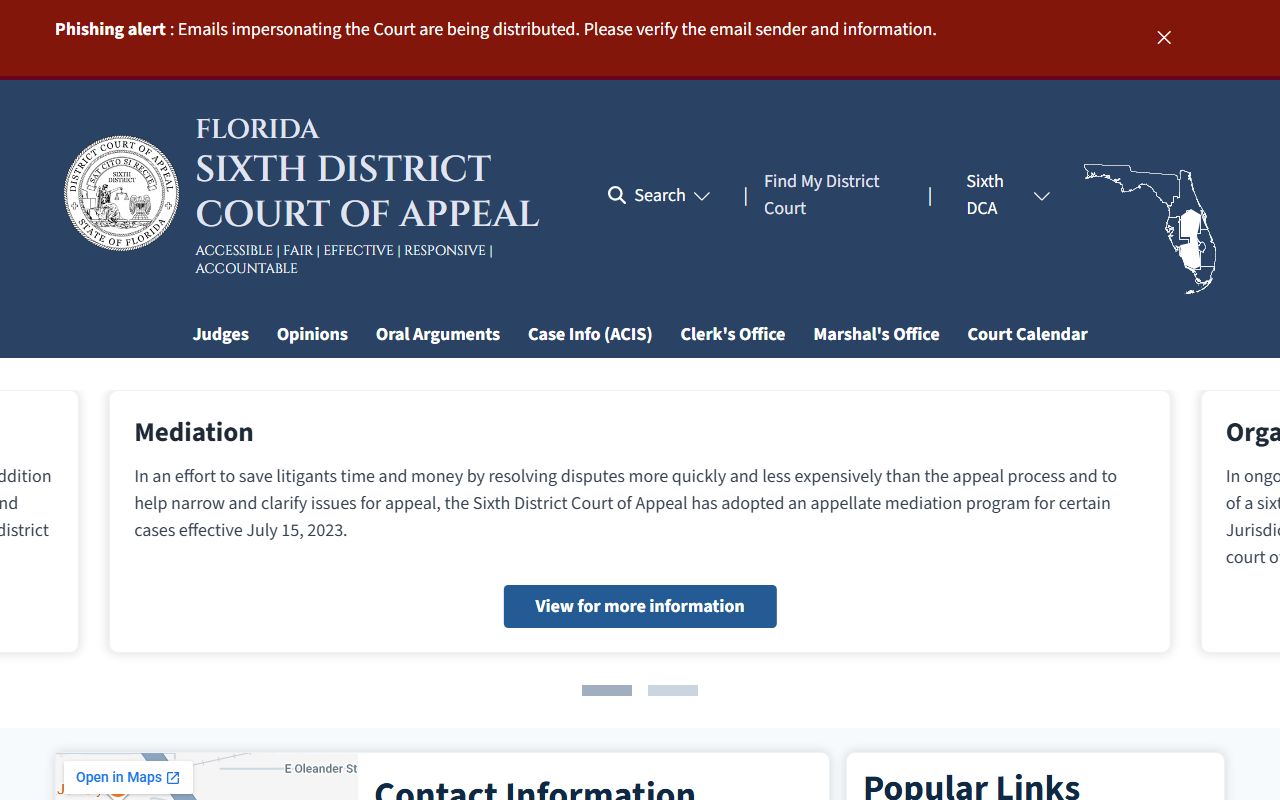
The Sixth District Court of Appeal hears intermediate state appeals from Osceola trial courts. Some cases tied to Osceola County are federal, not state. Federal cases are filed in the U.S. District Court for the Middle District of Florida. Federal appeals from that court go to the Eleventh Circuit.
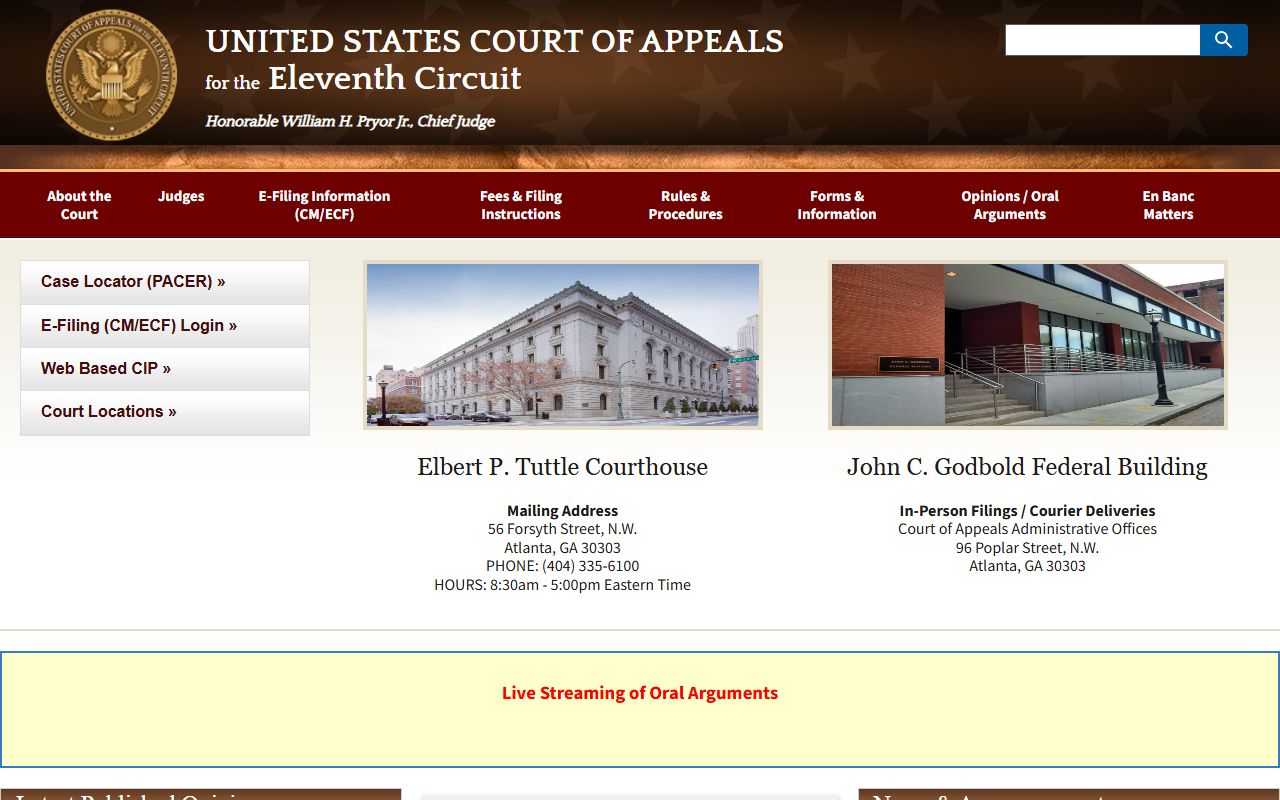
The Eleventh Circuit Court of Appeals reviews federal appeals from the Middle District of Florida. State and federal tracks stay separate, and they use different search tools.
The Osceola County Courthouse
Circuit court hearings for Osceola County are held at the courthouse in downtown Kissimmee. The building houses circuit and county court functions, plus clerk services for civil, criminal, family, probate, traffic, and jury matters. Expect weapons screening at entry. Bring a government ID for many clerk and court services. Phone numbers vary by division, so use the clerk site for current routing.
Osceola County Courthouse
2 Courthouse Square
Kissimmee, FL 34741
See clerk site for current hours
The courthouse sits in central Kissimmee near the civic center area. Parking, transit, and road closures can change near downtown events, so check before a hearing. Courtroom and judge assignment show up on the case docket or the hearing notice, not at the front door. For office details and contact help, the Clerk of Court page has the records office information.