
The Osceola County Clerk of the Circuit Court and County Comptroller
Florida runs a unified clerk system. The local office is the Osceola Clerk of the Circuit Court and County Comptroller. It is not split into a separate county clerk and district clerk the way some states divide the job. One elected office handles it all. That office keeps records for both the circuit court and the county court.
This single-office model makes record searches simpler. You do not have to guess which clerk holds a file. The same office covers civil, criminal, family, probate, traffic, and official records. It also issues marriage licenses and takes court payments. On the comptroller side, the office manages county funds and financial reporting. The Clerk is the public-records custodian for these court files, and the office collects the fees the state allows.
Osceola County sits in the Ninth Judicial Circuit, which it shares with Orange County. The courthouse is in downtown Kissimmee. For the trial courts that feed these records, see the Circuit Court and County Court pages.
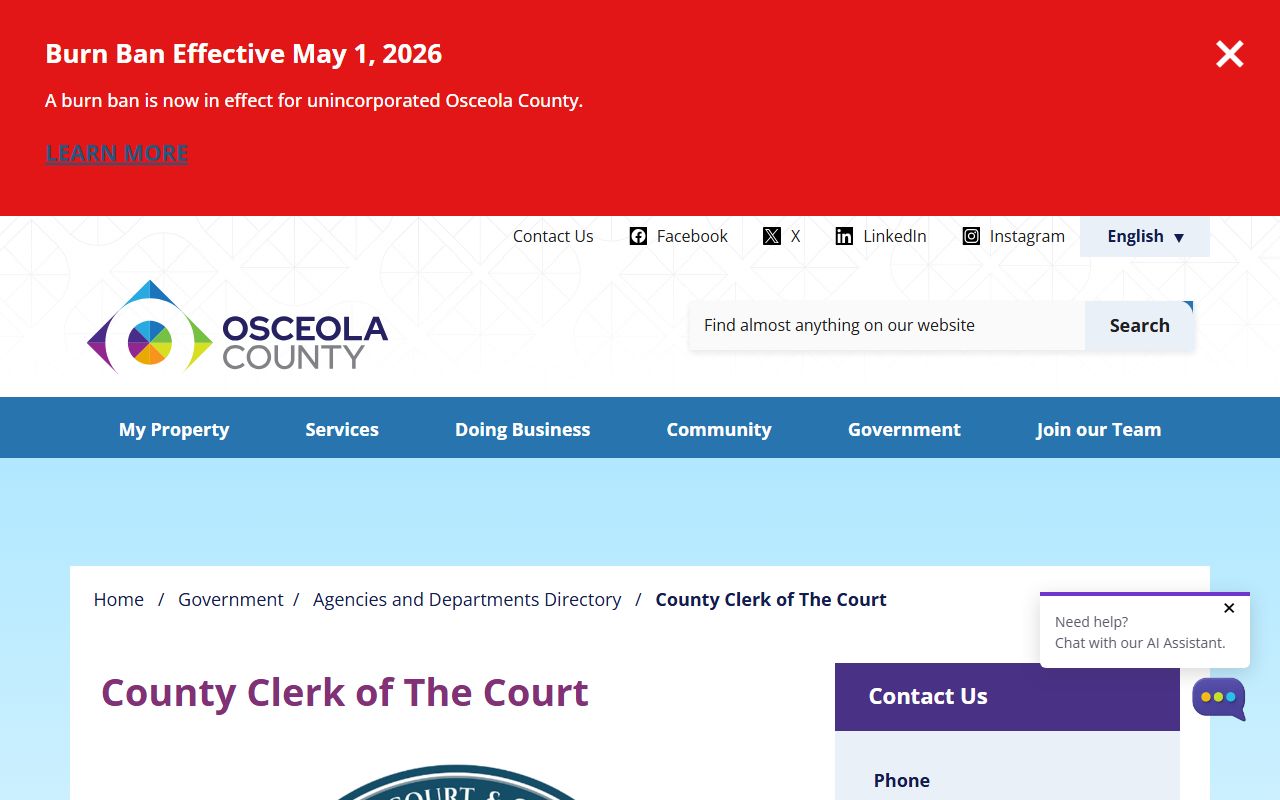
The county directory lists the office under its Clerk of Court entry, with links over to the Clerk's own site.
What the Osceola County Clerk Does
The Clerk wears many hats. The office files and stores court cases. It records deeds and other land papers. It issues marriage licenses. It takes payments for traffic tickets, fines, and court costs. It also runs the county's books as comptroller. That is a wide job, and it touches most public records people search for.
Here are the main duties the Osceola County Clerk of the Circuit Court and County Comptroller handles:
- Keep court case files for circuit and county court matters.
- Record official documents like deeds, mortgages, and liens.
- Issue and record marriage licenses.
- Maintain probate and guardianship filings.
- Process traffic citations and court payments.
- Manage jury and court financial functions.
- Provide certified copies of records on request.
The office does not give legal advice. Staff can show you how to search, what a fee is, and how to file a paper. They cannot tell you what to put in a pleading or how a judge may rule. For legal help, talk to an attorney or a self-help resource.
Court Records the Clerk Maintains
Court records make up a large part of the Clerk's work. The office keeps files from both trial-court levels in one system. That system is the Clerk's Benchmark case search. It pulls circuit and county cases into a single tool, so you search once. Records run from the first filing through the final judgment.
The case types are broad. The list below shows the main groups the Clerk holds.
- Civil cases, including small claims and evictions.
- Criminal cases, both felony and misdemeanor. See court records.
- Family cases, like dissolution, paternity, and child support.
- Probate, guardianship, and trust matters.
- Traffic citations and infraction appeals.
- Injunction and protective order filings.
Each case file tells a story. It names the parties. It lists every filing in date order. It records the result. Some document images can be viewed online. Restricted images show a notice instead. Traffic tickets are searchable by citation number when the citation has been filed and entered. For dissolution and related cases, see the marriage and divorce records page. For estate matters, see probate records.
Note: Public access does not mean every page sits online. Anyone can inspect a public file, but a certified copy and some services carry a fee, and ID may be needed for certain requests.
Official Records and Recording
Beyond court cases, the Clerk records official documents. These are the papers that affect property and legal rights. The office gives each one an instrument number and stores it in a separate portal from the court system. Title researchers, lenders, and property buyers use it most.
Official records include deeds, mortgages, liens, notices, plats, and recorded marriage records. You can search the official records portal by party name, document type, instrument number, or book and page. For recorded documents, use that portal rather than Benchmark. Benchmark holds court cases. The official records search holds recorded instruments. The same Osceola Clerk office runs both, and both link to certified copy ordering.
The official records search also offers property-style searches. You can look by plat book and page or by section, township, and range. A date-range filter narrows results, with quick buttons for the last 7, 30, or 90 days. For broad public-records requests that fall outside these portals, see the public records page.
How to Request a Certified Copy
A certified copy is more than a screen print. The Clerk attests that the copy is true and complete. Courts, banks, and agencies often need this. You can order one online through the eCertified link the portals use, or ask at the counter during a visit.
Follow these steps to request a certified copy:
- Find the record first. Search Benchmark for a court case or the official records portal for a recorded document.
- Note the case number or the instrument number. You will need it to order.
- Open the eCertified copy order page linked from the portal.
- Enter the document details and the number of copies you want.
- Pay the certification fee plus any per-page charge that applies.
- Choose delivery, whether download, mail, or pickup, where offered.
- Keep the receipt and confirmation for your records.
If a record is old or archived, it may not show online. Contact the Clerk so staff can pull the file by hand. The eCertified copy order page is the same tool both Clerk portals point to.
Clerk Fees
The Clerk charges set fees for copies, certifications, and recording. Florida fixes many of these under Fla. Stat. § 28.24. Recording taxes and service charges can apply on top of the base fee. Exact totals can change, and statutory fees interact with county recording taxes. Always check the current Clerk fee page before you pay. The table groups the common charges by category.
| Fee Category | Source / Notes |
|---|---|
| Plain copies | Set by the Clerk fee schedule under § 28.24. |
| Certified copies | Clerk certification fee; eCertified option online. |
| Recording fees | § 28.24 plus documentary stamp and recording taxes where they apply. |
| Court filing fees | State statutory filing fees plus local service charges. |
| Online documents | Some portals allow viewing; certified copies are ordered through eCertify. |
A viewing fee and a certified copy fee are not the same. A certified copy always costs more because the Clerk attests to it. Florida's broader public-records framework, including the right to inspect and copy, sits in Fla. Stat. § 119.07.
Marriage Licenses and Other Services
The Clerk issues marriage licenses for Osceola County. You apply at the office, meet the ID and eligibility rules, and pay the license fee. Florida law allows a reduced fee or a shorter waiting period in some cases for couples who finish a premarital course. After the ceremony, the executed license comes back to the Clerk for recording. You can then order certified copies.
The office handles more than marriage. Other common services include:
- Court payment processing for fines, costs, and traffic tickets.
- Filing and indexing of new court cases.
- Probate and guardianship case intake.
- Jury management and related court support.
- Recording of deeds, mortgages, and liens.
Divorce is not a license matter. Dissolution of marriage is a circuit court case, and you search it through Benchmark. The Clerk files the case, takes the fee, and keeps the final judgment. For more on those cases, see the marriage and divorce records page.
Visiting the Clerk's Office
You can visit the office in person at the courthouse in downtown Kissimmee. Bring a government ID. Expect weapons screening at entry. In-person service helps with older files and with records that are not online. Staff can pull a paper file, print a record at the counter, and explain the cost. Phone routing varies by division, so use the Clerk site for current numbers and hours.
Osceola Clerk of the Circuit Court and County Comptroller
2 Courthouse Square
Kissimmee, FL 34741
See clerk site for current hours
If you plan to use a record in court, ask for a certified copy at the time of your visit. The counter staff can certify it on the spot. For records that hold restricted images, the office can confirm what is open and what needs a court order or proof of standing.
Note: The courthouse is a working court building. Hearings, security lines, and parking can affect your visit, so allow extra time and confirm hours before you go.
Online Portals and Tools
The Clerk runs several online tools. Each one serves a different record set. Knowing which to use saves time. The main site links to all of them and to the fee and contact pages.
The records-request fields below show what you enter in the court case search. The form has a few core fields plus optional filters.
| Field Label | Type | Required | Notes / Format |
|---|---|---|---|
| Name | Radio + text | One mode required | Enter Last, First. Party name search. |
| Case Number | Radio + text | One mode required | Year, case type, six digits. Example 2004 TR 000123. |
| Citation Number | Radio + text | One mode required | Enter the citation number from the ticket. |
| Causes of Action / Case Types | Multi-select | Optional | Civil, family, probate, guardianship, eviction, small claims, traffic appeal. |
| Opened / Closed Date Range | Date | Optional | Advanced date-range fields in the posted form. |
The Clerk's main tools include the court case search for circuit and county cases, the official records search for recorded documents, and the Clerk main site for service links, fees, and contacts. The court portal offers Name, Case Number, and Citation Number modes. The official records portal offers party, document type, instrument number, and book and page searches.
Related Osceola County Searches
The Clerk's records are not the only public records county users need. Some related searches sit with other agencies. They can still matter when you research a person or a case. Two common ones are shown below with their official tools.
The state keeps a public registry of sexual offenders and predators. It is run by the Florida Department of Law Enforcement, not the Clerk, but Clerk users often check it too.
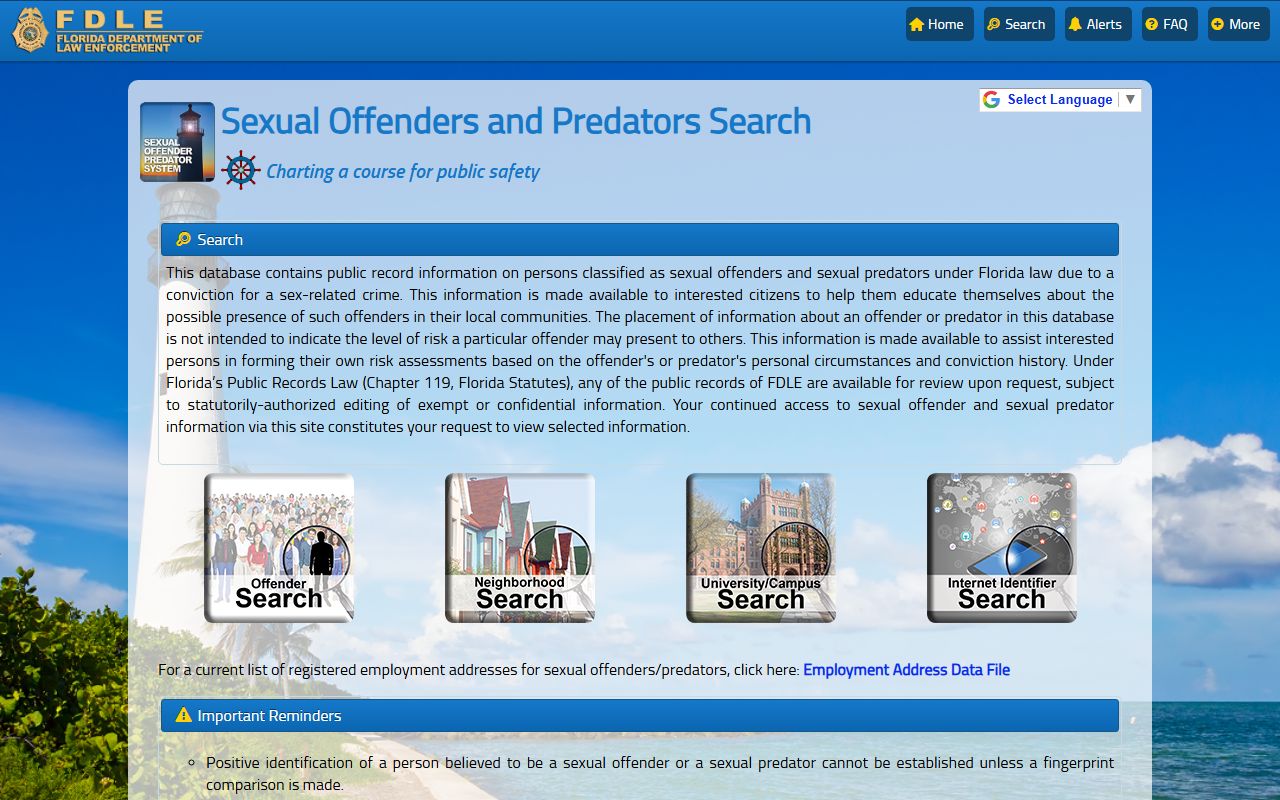
The FDLE sex offender search lets you search by offender, neighborhood, or campus. Placement in the database is not a risk rating, and positive ID needs a fingerprint match.
The county also posts who is currently in custody. This list comes from the Osceola Corrections Department and updates several times a day.
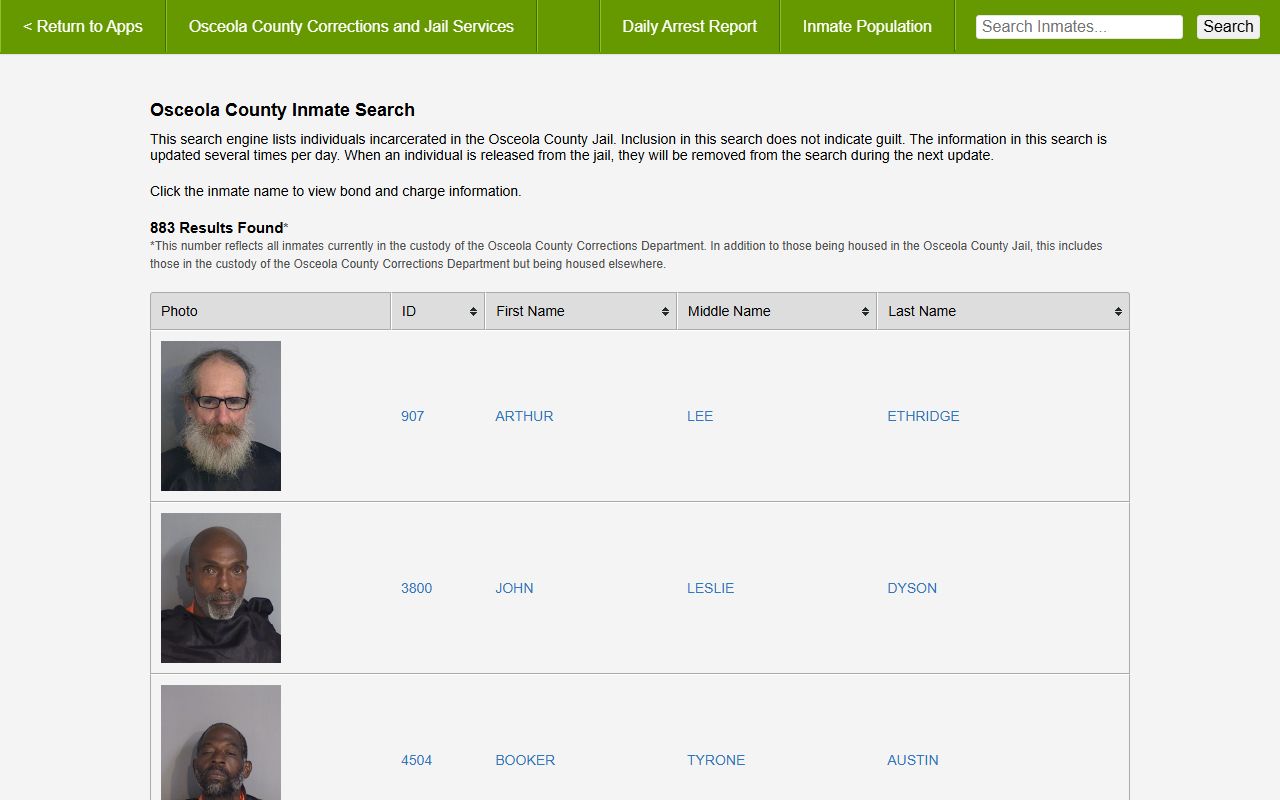
The current inmate population search shows people in custody now. Inclusion does not prove guilt, and released people drop off at the next update. For more on these and other records, see the public records and FAQ pages.